menu
close
Not Every Fiber Link Is Ready for UAV Deployment — Quality Proof Comes Before Mission Trust
Many UAV teams now understand why fiber communication is becoming more relevant.
Fiber can reduce RF dependency.
It can support stable data transmission.
It can help protect communication paths from electromagnetic interference.
It can support high-bandwidth and low-latency communication needs in demanding UAV applications.
But choosing fiber is not the same as choosing a deployment-ready communication link.
A fiber link may support long distance on paper.
It may show stable transmission in a basic test.
It may look suitable in a supplier proposal.
But UAV deployment adds a different set of pressures:
That is why the real question is no longer simply whether fiber works.
The better question is:
Can this specific fiber link be verified before it enters the UAV system?
For UAV projects, communication reliability should not begin with a claim on a datasheet.
It should begin with proof.
Fiber itself is not new.
It has been used for years in telecom networks, industrial systems, data centers, and harsh communication environments. The general advantages are well understood: high bandwidth, low signal loss, EMI resistance, and stable long-distance transmission.
But UAV deployment is different.
A UAV fiber communication link is not installed once, protected inside a building, and left untouched. It may be handled repeatedly. It may be routed through compact aircraft spaces. It may be wound, released, recovered, transported, inspected, and redeployed.
That changes the review standard.
The question is not only:
“Does fiber work?”
The better question is:
“Can this specific fiber link be trusted in this specific UAV deployment?”
That is where many project reviews become too shallow.
A supplier may say the link supports long distance.
A datasheet may show a bandwidth number.
A product page may mention low latency.
A proposal may claim reliability.
But for UAV teams, those claims are only useful when they are connected to verifiable details:
In mission-critical communication projects, uncertainty is not a small detail.
It becomes schedule risk.
It becomes integration risk.
It becomes field-test risk.
It becomes trust risk.
In UAV communication, fiber is not trusted because it is fiber. It is trusted because the link can be verified.
A deployment-ready UAV fiber link is not defined by one attractive specification.
It is defined by whether the link can survive the practical conditions around the aircraft, the operator, and the mission environment.
For UAV communication projects, the fiber link may need to support:
This is why UAV fiber review should be more concrete than a general statement of reliability.
A serious review may include:
The exact inspection scope may vary depending on cable structure, connector type, link configuration, and project requirements.
These details matter because they reduce uncertainty before the product reaches integration or field testing.
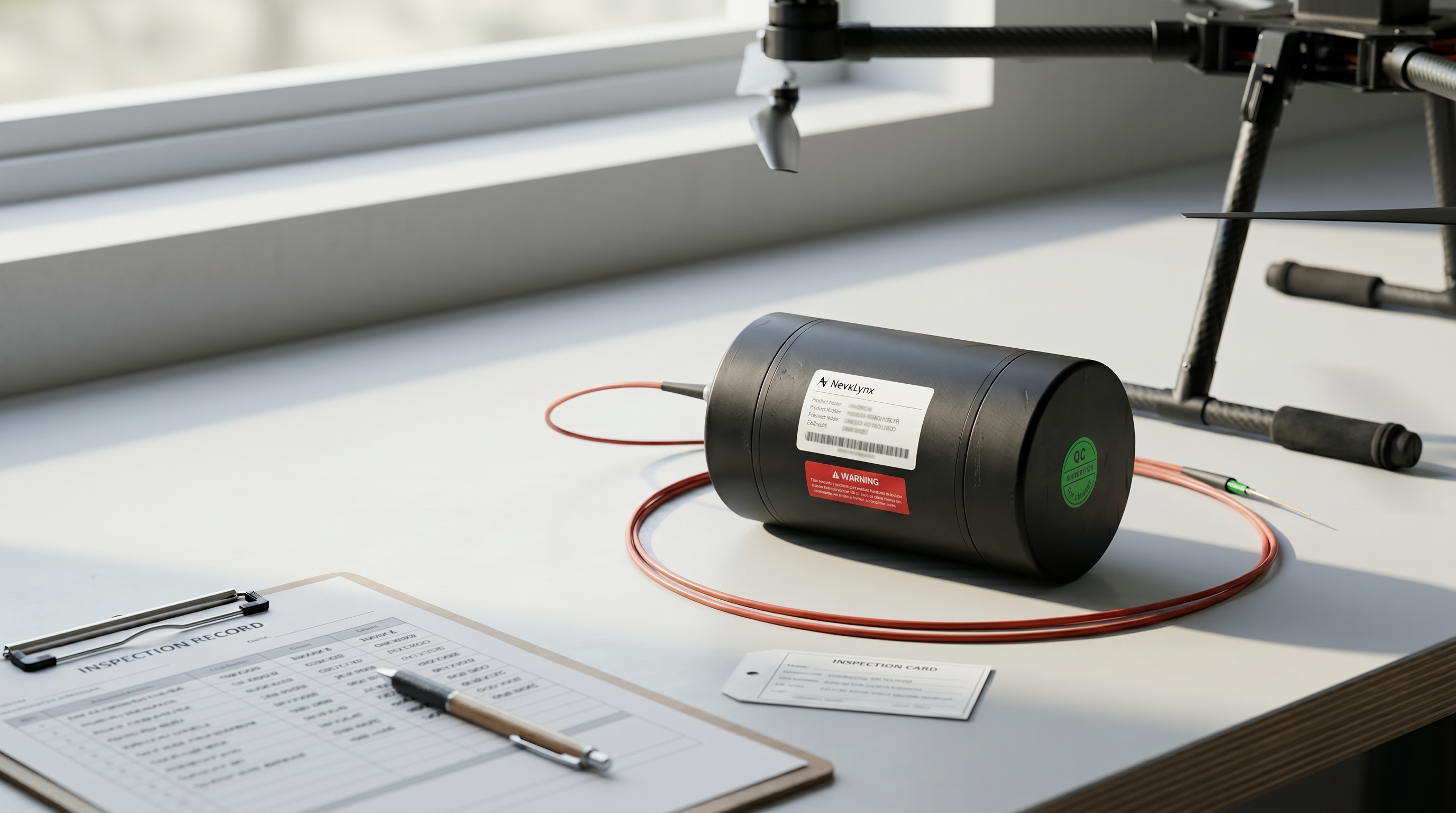
The first serious quality problem should not appear during a UAV field trial.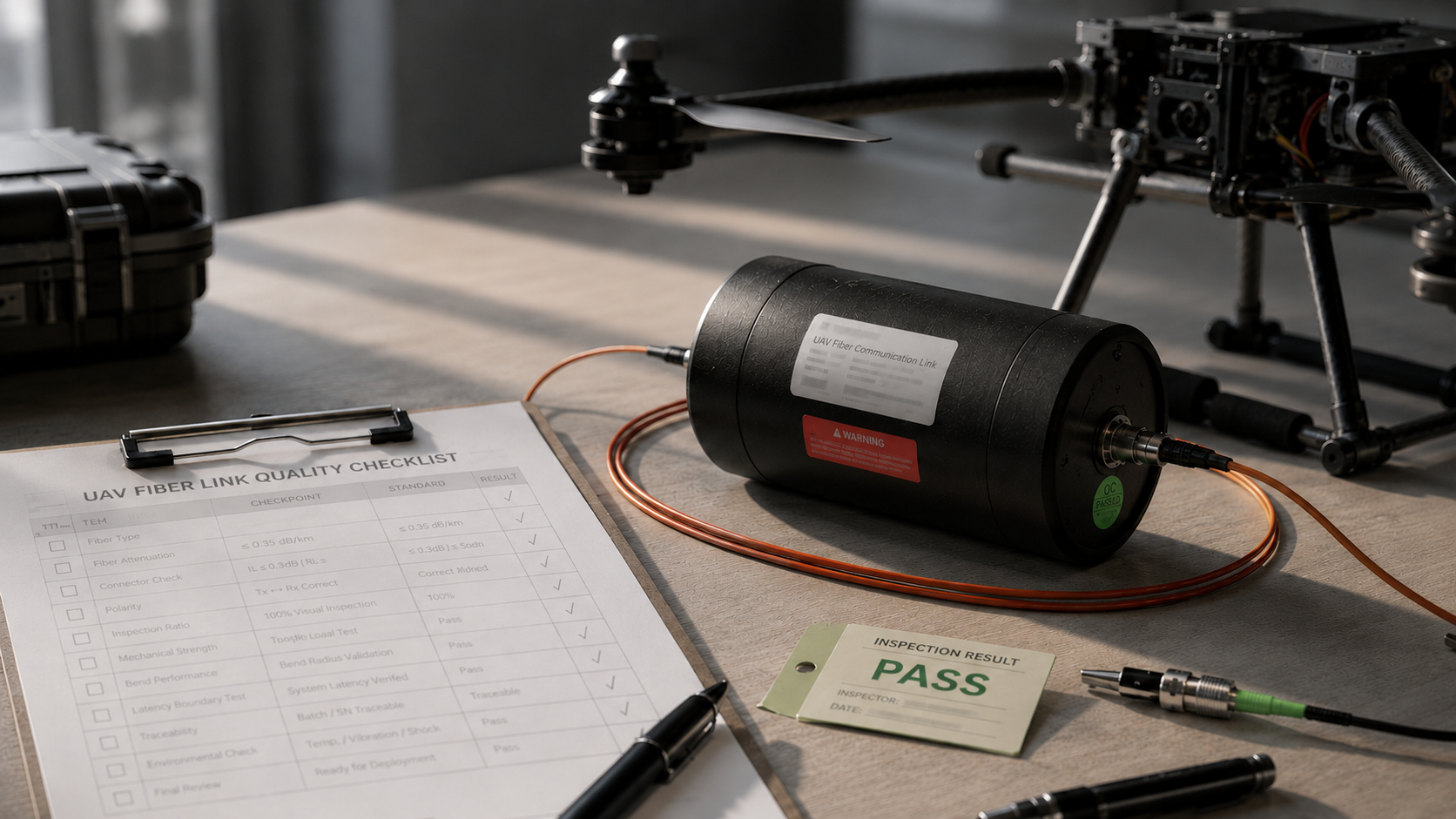
A fiber link that performs well in a fixed environment may not automatically perform well in UAV deployment.
This distinction matters.
In many standard fiber applications, the installation environment is controlled. The cable path is known. The bending radius can be managed. The fiber is protected inside ducts, trays, cabinets, or fixed routes. Once installed, it is not frequently moved.
UAV communication links face a different operating reality.
They may need to support:
This is why fiber selection matters.
A UAV fiber link is not only a cable.
It is part of the communication path that the mission depends on.
If the fiber is difficult to route, too fragile for repeated handling, poorly inspected, or sourced from unclear material, the project may not fail immediately. That is often the dangerous part.
The problem may appear later — during integration, during field testing, during repeated deployment, or after the system has already consumed engineering time.
For UAV teams, the cost of weak quality control is not only product replacement.
It is delayed validation.
It is repeated troubleshooting.
It is lost confidence in the communication system.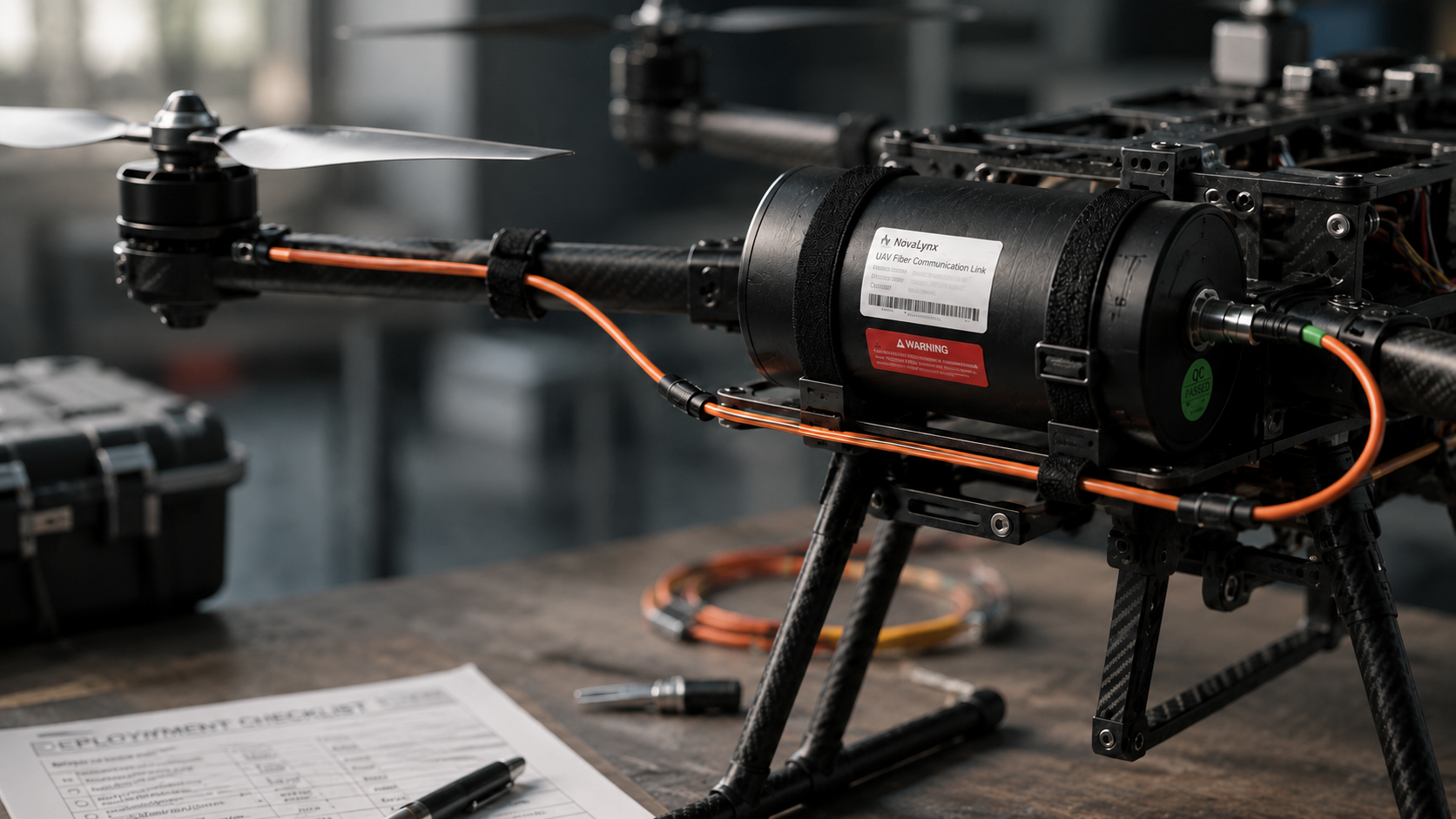
Fiber type is not a cosmetic specification.
It affects how the link behaves when the system is routed, bent, handled, stored, and deployed.
For UAV fiber communication links, G.657.A2 bend-insensitive fiber can be an important selection where compact routing and repeated handling are part of the deployment environment.
The reason is practical.
UAV fiber links are not always used in wide, protected cable routes. They may be wound on compact storage units. They may pass through tight routing paths. They may be released and recovered many times. They may be handled in field conditions where perfect cable management is not always possible.
In that context, bend performance becomes part of system reliability.
This does not mean G.657.A2 removes the need for proper deployment design. It does not make every routing decision safe. It does not replace engineering review.
Fiber type is only one part of deployment readiness. Cable structure, reel design, handling method, and inspection process still matter.
A simple specification sheet may say “fiber optic link.”
That phrase is not enough.
A better review asks:
What fiber is actually inside the link?
Why was that fiber selected?
Is it suitable for UAV routing, storage, release, and recovery?
Can the supplier explain its fit for the application?
That is the difference between buying a generic fiber product and reviewing a fiber communication link for mission use.
In UAV projects, material uncertainty becomes project uncertainty.
If the fiber source is unclear, the buyer has less control over quality expectations. If batch information is not managed, troubleshooting becomes harder. If the supplier cannot explain material selection, the project team may be forced to verify too much after delivery.
Traceability does not make a product perfect.
But it gives the buyer a clearer basis for trust.
A traceable fiber source helps project teams understand what they are integrating. It also makes quality discussion more concrete. Instead of relying only on supplier promises, the team can review material source, fiber type, batch information, and inspection process.
For UAV communication systems, this matters because the link is not an isolated accessory.
It affects control confidence.
It affects data transmission.
It affects field validation.
It affects how quickly the project team can move from evaluation to deployment.
When communication reliability matters, procurement should not be treated as a price-only decision.
The lowest-risk supplier is not always the one with the lowest quote.
It is often the one that can explain what is being supplied, how it is tested, and why it fits the mission environment.
A serious UAV fiber communication review should include one simple question:
What is checked before shipment?
This question is basic.
It is also often overlooked.
For many projects, the real problem does not begin with the first purchase order. It begins when the product arrives and the engineering team discovers inconsistencies that should have been caught earlier.
That may include:
In UAV projects, these issues create more than inconvenience.
They slow down integration.
They force additional internal testing.
They increase communication between engineering, procurement, and suppliers.
They delay field readiness.
This is why pre-shipment inspection matters.
A defined inspection process gives the buyer a clearer standard before the product enters the project workflow. An inspection ratio gives the project team a more concrete way to discuss quality control instead of relying on vague statements such as “high quality” or “reliable.”
For communication links used in demanding UAV environments, quality should be verified before it becomes a field problem.
Low latency is often used as a selling point in UAV communication.
But not every latency number means the same thing.
A latency figure may refer to:
These are very different boundaries.
For UAV projects, this distinction matters because communication latency is often reviewed together with control confidence, payload feedback, and operator decision-making.
A supplier should be able to explain what is included in the latency figure and what is not included.
For example, a communication-transmission layer latency range does not automatically represent total UAV system latency. The full system may also be affected by flight controller processing, payload encoding, protocol configuration, interface type, display rendering, wireless backup paths, and other external components.
This does not reduce the value of low-latency fiber transmission.
It makes the review more accurate.
A serious UAV communication supplier should not only provide a number.
It should explain the test boundary behind the number.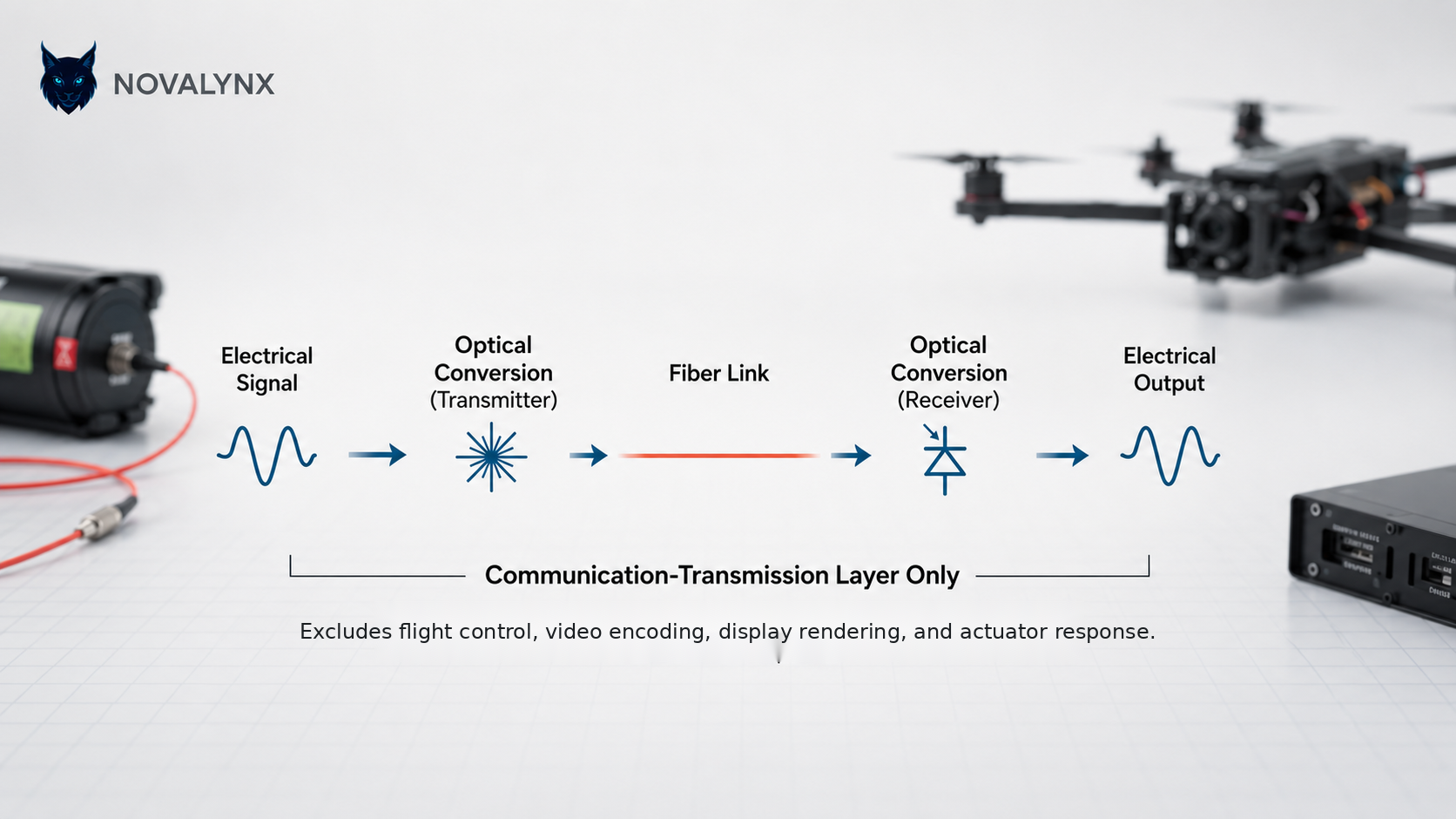
Before selecting a UAV fiber communication supplier, project teams should review more than distance, bandwidth, and price.
A better supplier review should include these questions:
Do not accept “fiber optic” as a complete answer.
Ask whether the fiber type matches the routing, bending, storage, and deployment conditions of the UAV system.
For compact routing and repeated handling, bend-insensitive fiber may be important. The supplier should be able to explain why a specific fiber type is selected.
Traceability helps reduce uncertainty around material quality, batch control, and long-term consistency.
The answer should be specific.
General quality claims are not enough.
A defined inspection ratio gives the buyer a clearer view of how quality is controlled before delivery.
Connector condition matters because contamination, scratches, and defects can affect optical performance and create integration issues.
Labels and records help project teams manage traceability, internal validation, and future troubleshooting.
A UAV fiber link may be wound, released, recovered, and redeployed. The supplier should understand that use case.
Low latency claims should be connected to a clear measurement boundary. Teams should know whether the figure refers to the communication-transmission layer, module-level performance, round-trip measurement, or full system latency.
This is one of the most important questions.
UAV communication is not ordinary cabling.
The supplier should understand deployment pressure, integration needs, and field reliability expectations.
NovaLynx is not positioned as a generic fiber supplier.
NovaLynx supports UAV fiber communication solutions designed for deployment environments where traceability, inspection, low-latency transmission, and field reliability matter.
For UAV teams evaluating fiber communication, NovaLynx focuses on practical questions that matter before field deployment:
NovaLynx helps UAV teams review fiber communication links not only by performance claims, but by proof: fiber type, traceability, inspection, latency boundary, and deployment fit.
This is the difference between supplying a component and supporting a communication path.
A UAV team does not only need fiber.
It needs a fiber link that can be reviewed, verified, integrated, and trusted.
As UAV systems become more demanding, communication reviews need to become more practical.
It is not enough to ask whether fiber is better than RF in general.
It is not enough to compare bandwidth numbers.
It is not enough to choose the lowest quote.
The better question is:
Can this fiber link be trusted before it enters the UAV system?
That trust comes from material selection.
It comes from traceability.
It comes from inspection.
It comes from clear test boundaries.
It comes from a supplier that understands UAV deployment, not only fiber transmission.
If the first quality problem appears during field testing, the cost is no longer a cable replacement.
It becomes engineering delay.
It becomes failed validation.
It becomes lost confidence in the communication path.
For UAV projects, quality proof should come before mission trust.
If your team is evaluating fiber communication for UAV deployment, review the proof behind the link before the field test exposes the weakness.
FAQ
What fiber type is suitable for UAV fiber communication links?
For UAV deployment, the fiber type should match the routing, bending, storage, and handling conditions of the system. G.657.A2 bend-insensitive fiber may be suitable where compact routing, reel-based storage, or repeated handling are part of the deployment environment.
G.657.A2 matters because UAV fiber links may be routed through compact spaces, wound on storage units, released, recovered, and handled repeatedly. Bend performance can affect how suitable the link is for real deployment conditions.
A serious pre-shipment inspection may include fiber type confirmation, batch labeling, connector condition review, connector end-face inspection, visual inspection, transmission continuity check, insertion loss review where applicable, and inspection record verification.
Traceability helps project teams understand the fiber source, batch information, and quality control process behind the link. This reduces procurement uncertainty and supports future troubleshooting.
No. A latency figure may refer to the communication-transmission layer, module-level performance, one-way measurement, round-trip measurement, or full system latency. UAV teams should ask suppliers to explain the test boundary behind any latency claim.
NovaLynx helps customers solve interference and communication reliability challenges in complex UAV and mission-critical scenarios. Our solutions cover fiber optic systems, anti-jamming communication modules, and tailored integration support based on real operational needs.